For hardware engineers and product designers, achieving extreme Touch Screen Durability is not about guesswork; it is about engineering your device to meet strict international standards. In this guide, Xingyue Technology breaks down the science of rugged displays, explaining exactly what IP and IK ratings mean, and how to utilize a custom glass cover to create a truly indestructible interface for your next project.
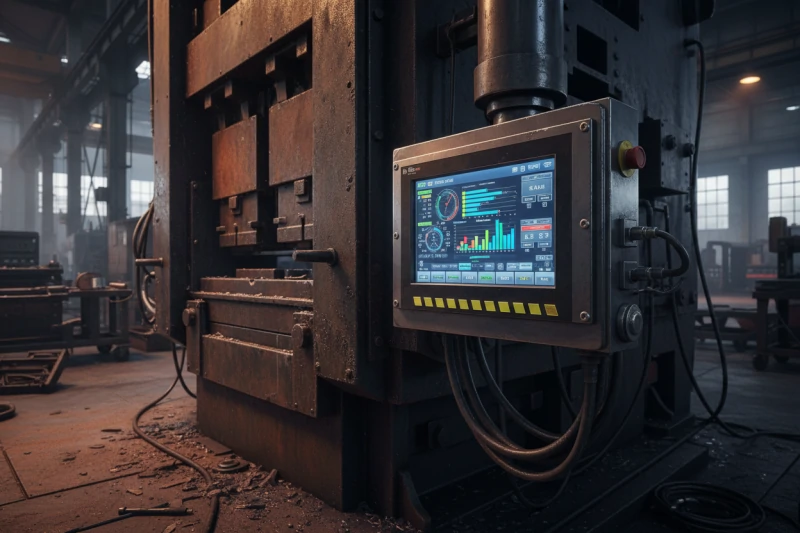
The Foundation of Touch Screen Durability in Harsh Environments
Before diving into the acronyms, we must understand the environment. A display on an outdoor ticketing kiosk faces different threats than a medical monitor in an operating room.
The Hidden Costs of Screen Failure in the Field
Field replacements are astronomically expensive. Sending a technician to replace a shattered screen on a remote ATM or a water-damaged HMI on a factory floor costs far more than the component itself. Investing in upfront durability eliminates these massive backend maintenance costs.
Defining "Rugged" for Industrial and Outdoor Use
"Rugged" is a marketing term; IP and IK ratings are engineering facts. A truly rugged device must successfully resist two primary categories of attack: environmental ingress (dust and water) and mechanical impact (vandalism or accidents).
Demystifying IP Ratings: What is an IP65 Touch Screen?
The IP (Ingress Protection) code is an international standard (IEC 60529) that classifies the degrees of protection provided against the intrusion of solid objects, dust, accidental contact, and water in electrical enclosures.
Decoding the Ingress Protection (IP) Chart
An IP rating typically consists of two numbers (e.g., IP65).
The First Digit (Solids): Ranges from 0 to 6. A "6" means the device is completely "Dust Tight"—no ingress of dust whatsoever.
The Second Digit (Liquids): Ranges from 0 to 9. A "5" means the device is protected against low-pressure water jets from any direction.
Why IP65 is the Sweet Spot for Industrial Displays
An IP65 touch screen is the gold standard for most industrial HMIs and outdoor kiosks. It guarantees that fine factory dust cannot enter the display housing to cause short circuits, and it ensures the screen can be hosed down or exposed to heavy rain without failing.
Sealing Techniques: Preventing Dust and Water Jets
Achieving an IP65 rating isn't just about the screen itself; it's about integration. As a manufacturer, we design our touch panels with specific adhesive gaskets and bezel structures that allow system integrators to create a watertight seal when mounting the display to their machine's chassis.
Understanding IK Ratings: Designing a Vandal Proof Screen
While IP protects against nature, the IK code (IEC 62262) protects against human interaction—specifically, kinetic impact. If you are building an ATM, a parking meter, or a self-service kiosk, you must design a vandal proof screen.
The Mechanics of the Impact Protection (IK) Scale
The IK scale ranges from IK00 (no protection) to IK10 (maximum protection). It measures the capacity of an enclosure to withstand external mechanical impacts, measured in Joules (J).
Translating Joules of Energy into Real-World Impacts
To visualize this:
IK07: Protects against 2 Joules of impact (equivalent to a 0.5 kg steel ball dropped from 40 cm).
IK08 rating: Protects against 5 Joules of impact (a 1.7 kg ball dropped from 30 cm). This is generally considered the baseline for a vandal proof screen in public areas.
IK10: Protects against 20 Joules of impact (a 5 kg ball dropped from 40 cm). This represents a deliberate, heavy swing with a blunt object.
Meeting IK08 Rating Standards for Public Kiosks
For most unattended public kiosks, achieving an IK08 rating offers the optimal balance of extreme protection, optical clarity, and cost-effectiveness.
The Critical Role of the Glass Cover in Impact Resistance
The LCD panel itself is incredibly fragile. The entire burden of achieving an IK08 or IK10 rating falls on the uppermost layer: the cover glass.
Chemically Strengthened vs. Thermally Tempered Glass
Standard soda-lime glass will shatter easily. To build rugged displays, we rely on two hardening methods:
Thermally Tempered Glass: Heated to extreme temperatures and rapidly cooled. It is strong and shatters into small, blunt cubes for safety, but cannot be easily cut or shaped after tempering.
Chemically Strengthened Glass: Submerged in a molten potassium bath, causing an ion exchange that tightly packs the surface of the glass. It provides vastly superior scratch resistance and impact strength, even at thinner profiles, making it ideal for high-end touch screens.
Preventing Dangerous Shattering with Specialized Treatments
For critical applications, we can add an anti-spall (anti-shatter) film. Even if an extreme impact (beyond IK10) breaks the custom glass cover, the film holds the shards in place, protecting the user from injury and the internal LCD from being pierced.
Engineering Your Display: Custom Glass Cover Thickness and Bonding
Achieving top-tier Touch Screen Durability requires bespoke engineering. Off-the-shelf screens rarely survive IK10 testing.
Selecting the Right Glass Thickness for Your Target IK Rating
As a general engineering guideline:
1.1mm - 2.0mm: Standard consumer use (IK04-IK06).
3.0mm - 4.0mm: Industrial and light outdoor use; typically required to reliably pass an IK08 rating.
6.0mm and above: High-risk public environments, ATMs, and military applications aiming for IK10.
The Structural Benefits of Optical Lamination (Bonding)
Simply slapping a thick piece of glass over an LCD isn't enough. We utilize Optical Bonding to fuse the thick cover glass, the touch sensor, and the LCD into a single solid block using optical-grade resin. This eliminates the hollow air gap. When an impact occurs, the solid resin absorbs and disperses the kinetic energy across the entire module, massively increasing the screen's overall impact resistance compared to air-bonded screens.
Partnering with an Expert Glass Cover Manufacturer
Designing a rugged device is a complex matrix of material science, electronics, and mechanical engineering. You cannot achieve an IP65 or IK10 rating by accident.
By partnering with Xingyue Technology, you gain access to an expert Glass Cover Manufacturer and display integrator. We offer fully , specific thickness tuning, advanced chemical strengthening, and in-house optical bonding to guarantee your product survives whatever the real world throws at it.
Designing a device for a tough environment? Don't leave your display protection to chance. to discuss custom glass covers and rugged IP/IK rated touch screen solutions.
Frequently Asked Questions (FAQ)
1. What is the difference between IK08 and IK10 impact ratings? The primary difference is the kinetic energy they can withstand. An IK08 rating protects against an impact of 5 Joules, which simulates aggressive daily use or accidental strikes. An IK10 rating protects against 20 Joules, which simulates deliberate, severe vandalism with a heavy, blunt object.
2. Can an IP65 touch screen work properly underwater? No. An IP65 touch screen is completely protected against dust and low-pressure water jets (like rain or being hosed down). However, it is not designed for continuous submersion. For underwater applications, you would require an IP67 or IP68 rating, along with highly specialized capacitive touch tuning for underwater operation.
3. How thick should a custom glass cover be for a public kiosk? For a standard indoor/outdoor public kiosk, we strongly recommend a custom glass cover