For hardware founders and procurement managers, searching B2B platforms often yields thousands of results, making it difficult to separate true manufacturing powerhouses from mere trading companies. How do you find a genuinely you can trust?
At Xingyue Technology, we welcome rigorous evaluation. We have compiled this comprehensive checklist to help you conduct effective supplier audits and identify truly reliable touch screen manufacturers.
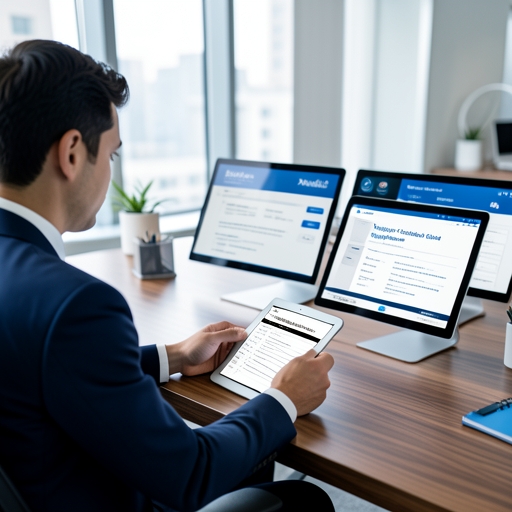
The Trading Company vs. The True Custom Display Manufacturer
The first step in any supplier audit is verifying the nature of the business. You want to work with the source, not a middleman.
Spotting the Difference Between Brokers and Real Factories
Trading companies often have beautiful catalogs but lack deep technical knowledge. During your evaluation, ask for photos or a live video tour of their cleanrooms, optical bonding machines, and reliability testing labs. A true manufacturer will gladly show you their assembly lines; a broker will make excuses.
The Hidden Costs of Using Intermediaries for Custom Projects
When you use a middleman, communication is filtered, leading to critical engineering errors. Furthermore, brokers add their own margins on top of the factory price. Partnering directly with a source factory ensures transparent pricing and direct access to the engineers actually building your product.
Assessing Production Capacity and Scalability
A supplier might be able to hand-build 50 beautiful prototypes, but can they deliver 50,000 units on schedule?
Why 300K/Month Capacity Matters for Your Deadlines
Look at the factory's volume. A facility with a production capacity of 300,000 units per month, like Xingyue Technology, possesses the automated machinery, the trained workforce, and the supply chain leverage required to absorb massive orders without missing delivery deadlines.
Flexibility: Transitioning from Pilot Runs to Mass Production
A reliable supplier must be scalable. Your audit should confirm if the manufacturer is willing to support low-volume pilot runs (NPI phase) and has a clear, documented process for scaling that up to mass production without a drop in quality.
The Role of Automated Assembly Lines in Consistency
Manual assembly leads to human error. Ensure the manufacturer utilizes automated dispensing machines, automated optical bonding equipment, and AOI (Automated Optical Inspection) systems to guarantee batch-to-batch consistency.
Quality Certifications: The Baseline for Supplier Audits
Promises are cheap; certifications are earned. Supplier audits must rigorously evaluate the factory's Quality Management System (QMS).
ISO 9001: The Non-Negotiable Standard for Quality Management
If a factory does not hold a current ISO 9001 certification, walk away. This standard proves they have formal processes for traceability, defect management, and continuous improvement.
Advanced Standards: IATF 16949 (Auto) and ISO 13485 (Medical)
If your product is destined for harsh environments or critical care, look for advanced certifications. A manufacturer that holds ISO 13485 (Medical) or adheres to IATF 16949 (Automotive) principles operates at the absolute highest echelon of manufacturing discipline.
In-House Reliability Testing Labs vs. Outsourced QA
Does the factory test their own products? A top-tier manufacturer will have an in-house reliability lab equipped with thermal shock chambers, vibration tables, and drop-test rigs to validate screen durability before shipping.
In-House R&D and Engineering Support Capabilities
You aren't just buying glass and silicon; you are buying engineering expertise.
Do They Offer Optical Bonding and Custom Glass Fabrication?
Can the supplier chemically strengthen glass to IK10 standards in-house? Do they have Class 10k cleanrooms for Optical Bonding? A true controls these critical, high-value processes under their own roof rather than outsourcing them.
Evaluating Firmware Tuning and EMI Shielding Expertise
If your screen suffers from "ghost touches" due to water or electrical noise, can the supplier fix it? Evaluate their software team. The best touch screen manufacturers offer custom firmware tuning for touch controller ICs and can implement advanced EMI shielding designs (like Metal Mesh).
Is the Supplier a Co-Developer or Just an Assembler?
Your supplier should be able to review your CAD files and offer DFM (Design for Manufacturing) feedback to improve your product's yield rate and lower costs.
Supply Chain Management and Financial Stability
A supplier with a brilliant factory can still fail you if their own supply chain collapses.
Securing Raw Materials: LCD Panels and Touch ICs
During your audit, ask about their relationships with upstream vendors. Strong manufacturers have direct, long-standing partnerships with major LCD foundries (like BOE, AUO) and IC makers (like ILITEK, EETI), ensuring priority allocation during global shortages.
Safety Stock Programs to Buffer Against Market Shortages
A truly reliable supplier will offer VMI (Vendor Managed Inventory) or safety stock programs, pre-purchasing critical raw materials to protect your lead times against sudden market fluctuations.
Partner with Xingyue: Your Reliable Supplier for Global Growth
Finding the right manufacturing partner is a rigorous process, but the payoff is a secure, scalable, and profitable hardware product. By evaluating capacity, quality certifications, engineering depth, and supply chain strength, you can separate the industry leaders from the rest.
At Xingyue Technology, we have built our global reputation by exceeding these stringent benchmarks. Ready to put our factory to the test? We welcome comprehensive supplier audits from global clients. Contact our team today to and see why we are the reliable capacitive touch screen supplier you’ve been searching for.
Frequently Asked Questions (FAQ)
1. Can we conduct a video factory audit before placing an order? Absolutely. We understand that international travel isn't always feasible. We routinely conduct live, comprehensive video audits for our global clients, walking them through our incoming inspection areas, Class 10k cleanrooms, automated assembly lines, and reliability testing labs.
2. How important is a Class 10k cleanroom for touch screen manufacturing? It is critical, especially for Optical Bonding and advanced display assembly. A Class 10k (or better) cleanroom ensures that no microscopic dust particles are trapped between the display layers during manufacturing, which is essential for achieving zero-defect visual clarity and preventing screen failures.
3. What questions should I ask to verify a supplier's engineering capabilities? During supplier audits