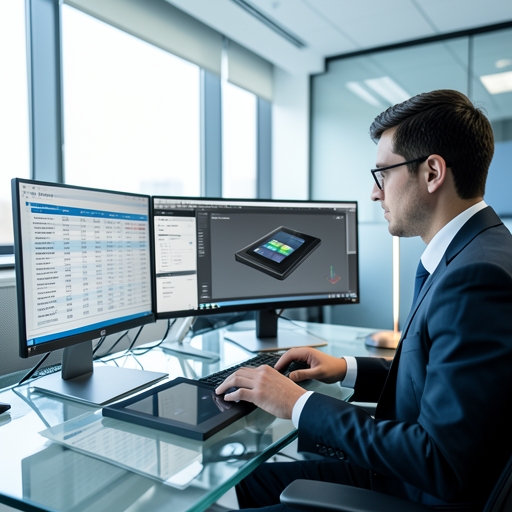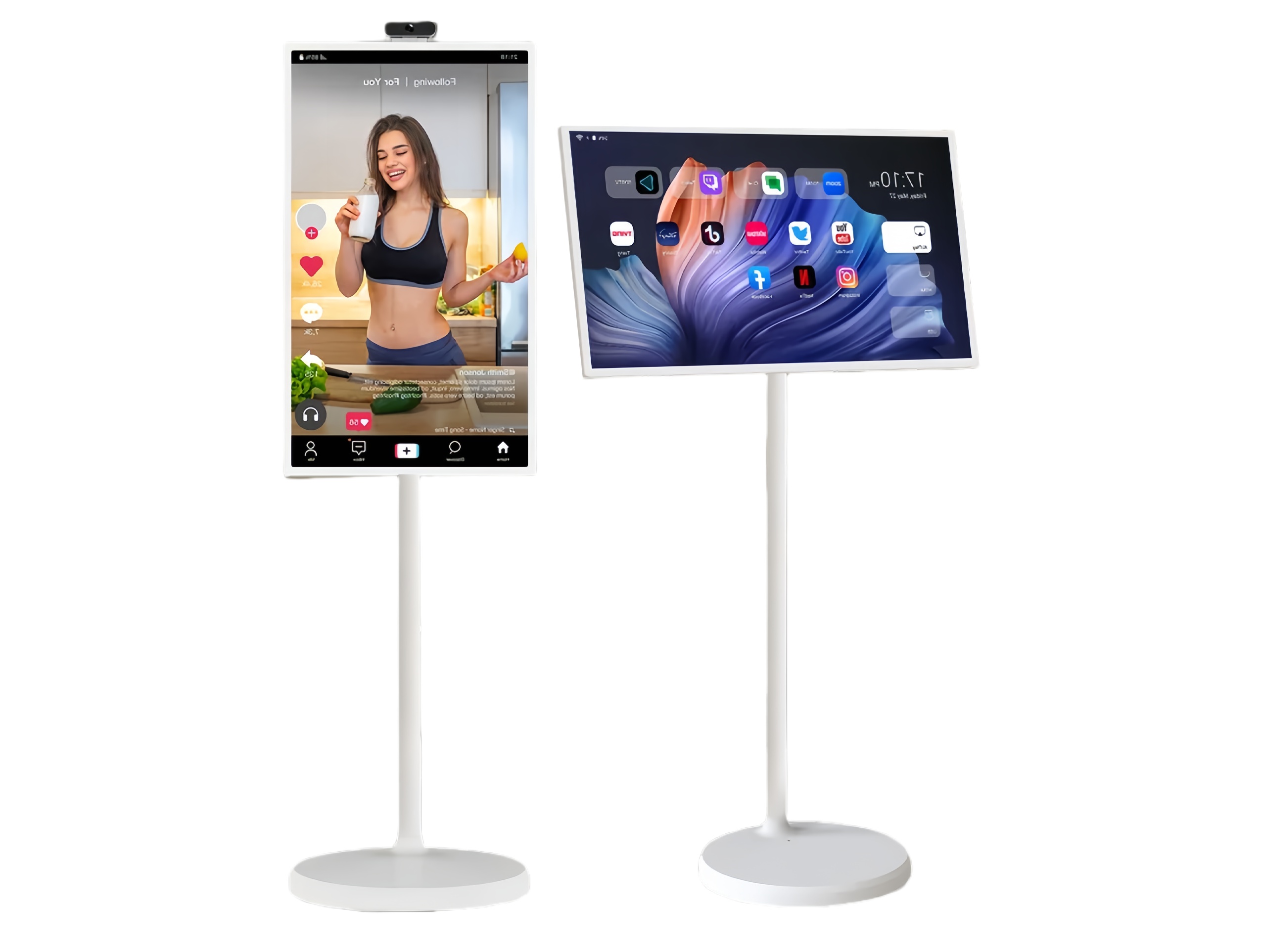
Recently, a leading manufacturer of bedside patient monitoring systems approached Xingyue Technology. Their existing displays were failing—coatings were peeling under harsh daily cleaning, and hospital administrators were demanding better infection control measures. They needed a robust Antimicrobial Medical Touch Display that met strict ISO 13485 standards.
This case study explores how we engineered a hygienic, durable, and high-performance Medical Touch Display solution to meet these life-critical demands.
The Challenge: Balancing Hygiene, Durability, and Usability
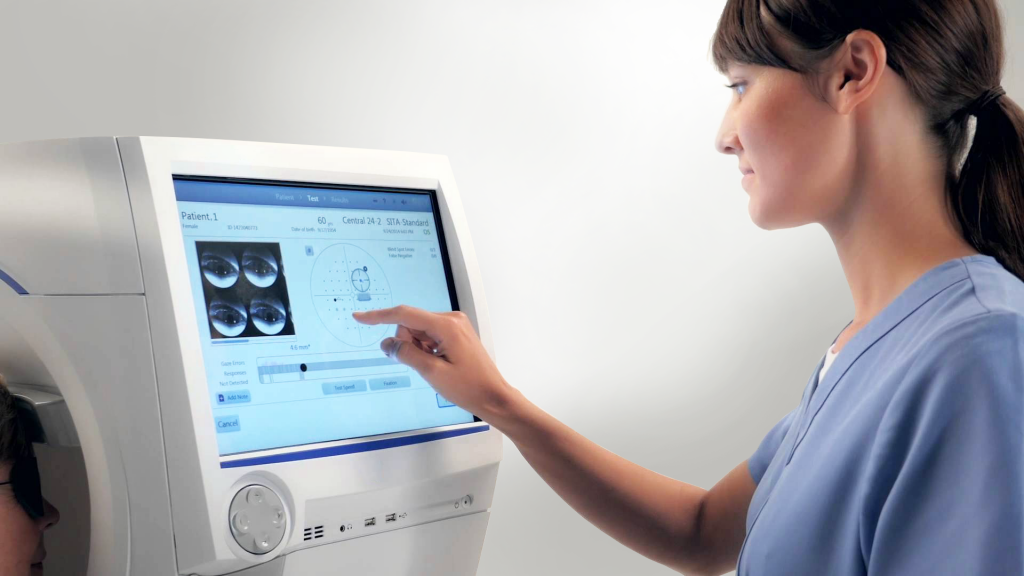
Our client’s previous off-the-shelf tablets were not built for the rigors of the Operating Room (OR) or Intensive Care Unit (ICU).
The Risk of Healthcare-Associated Infections (HAIs)
Hospitals are constantly fighting Healthcare-Associated Infections (HAIs). Surfaces that are touched frequently, like a Medical Terminal Display, are prime hotspots for bacteria transfer. Standard glass offers no defense against microbes.
Why Consumer Tablets Fail in Hospital Environments
Consumer devices are designed to be wiped with a soft cloth. In a hospital, screens are scrubbed multiple times a day with bleach, isopropyl alcohol, and other harsh chemicals. This chemical assault caused the client's previous screens to haze, yellow, and lose touch sensitivity.
The Need for Strict ISO 13485 Compliance
The client required a partner who could provide full traceability and documentation to support their device's CE and FDA certification. Only an ISO 13485 certified manufacturer could meet this regulatory burden.
Solution 1: Nano-Silver Technology for an Antimicrobial Screen
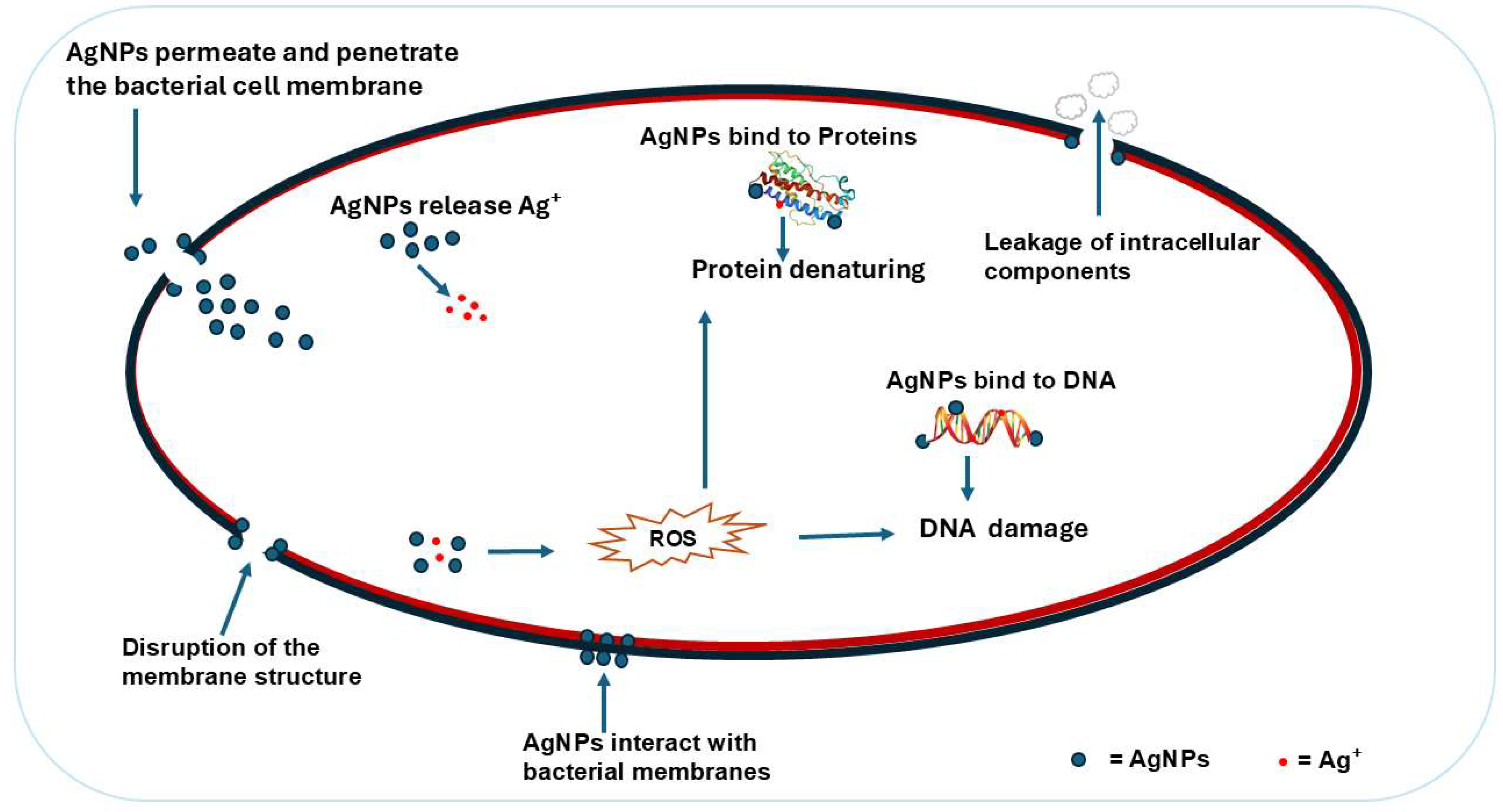
To address the infection control requirement, we moved beyond temporary surface sprays. We engineered a custom Antimicrobial Screen using nano-silver technology.
How Ionic Silver Inhibits Bacterial Growth
Silver ions (Ag+) are natural antimicrobial agents. They penetrate the cell walls of bacteria like E. coli and MRSA, disrupting their DNA and preventing reproduction.
Integrating Antimicrobial Properties into the Glass Matrix
Instead of a coating that wears off, we utilized a specialized ion-exchange process to embed nano-silver ions directly into the glass matrix of the touch panel. This ensures the antimicrobial efficacy remains active for the entire lifespan of the Medical Equipment Touch Screen, regardless of how many times it is cleaned.
Solution 2: Engineered for Harsh Chemical Disinfection
Hygiene protocols are non-negotiable. The screen had to survive the hospital's cleaning regimen.
Testing Against Isopropyl Alcohol and Bleach
We selected a chemically strengthened cover glass and subjected it to rigorous chemical resistance testing. The glass was exposed to concentrated bleach, 70% isopropyl alcohol, and quaternary ammonium compounds for hundreds of hours to ensure no discoloration or etching occurred.
Enhanced AF Coating to Prevent Smudges and Residue
We applied a vacuum-deposited Anti-Fingerprint (AF) coating. This oleophobic layer not only reduces unsightly fingerprints but also makes the surface hydrophobic (water-repellent), allowing disinfectants to be wiped away easily without leaving a sticky residue.
Solution 3: Precision Touch with Medical Gloves and Wet Hands
In an emergency, a nurse cannot take off gloves to use a screen.
Tuning Capacitive Sensors for Latex and Nitrile Gloves
We customized the firmware of the touch controller IC. By increasing the signal-to-noise ratio (SNR), we tuned the capacitive field to detect the minute electrical change of a finger even through multi-layered latex or nitrile surgical gloves.
Water Rejection Algorithms for Saline and Blood Splashes
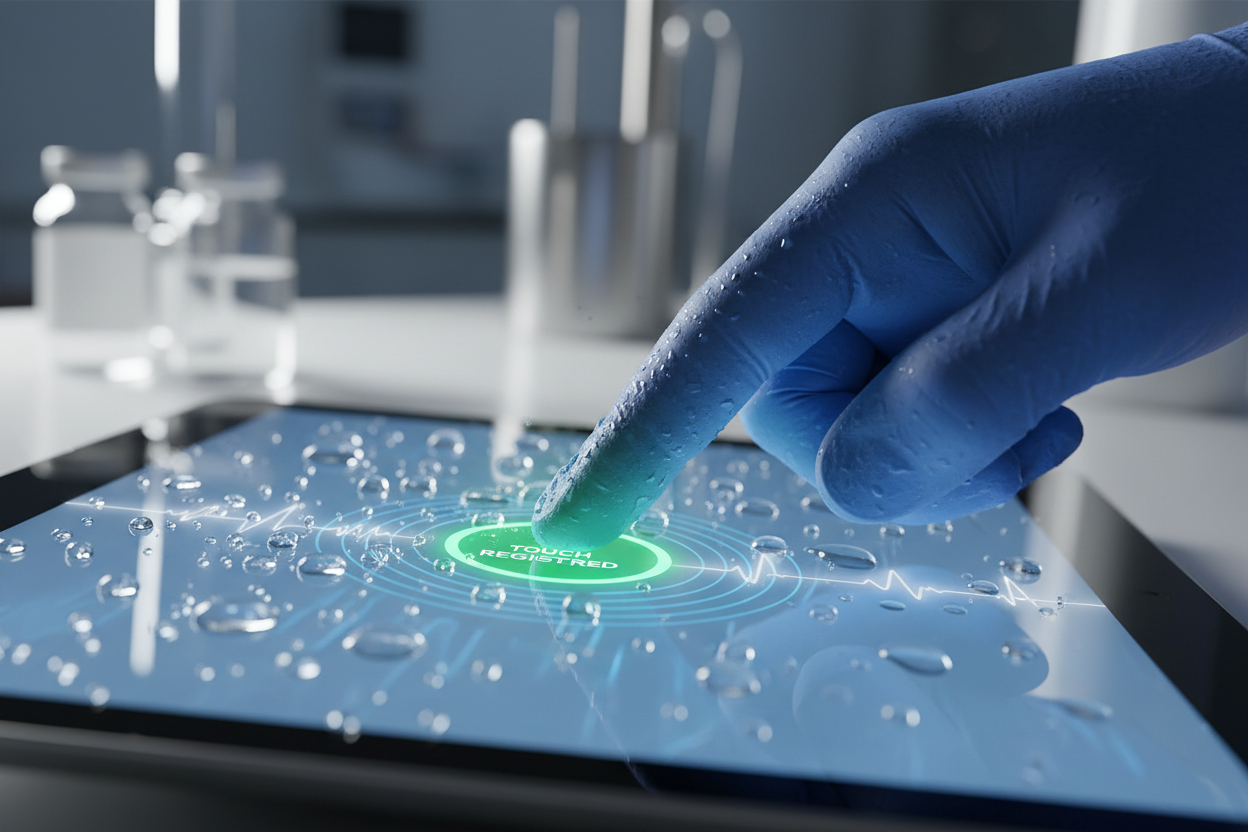
Fluids are common in medical settings. We implemented advanced water rejection algorithms. The screen can intelligently distinguish between a splash of saline solution (which it ignores) and a deliberate finger press (which it registers), preventing accidental inputs during critical procedures.
Ensuring Compliance: The ISO 13485 Manufacturing Process
Technical specs are only half the battle. Regulatory compliance is the other.
Full Traceability of Materials and Components
As an ISO 13485 certified facility, Xingyue Technology implemented a strict traceability system. Every batch of glass, every controller IC, and every adhesive used in the client's display can be traced back to its source, a critical requirement for medical device audits.
EMI/EMC Shielding for Medical Safety Standards
To ensure the display didn't interfere with sensitive equipment like pacemakers or MRI machines, we integrated a transparent conductive film (ITO) for EMI shielding. This helped the client's final device pass stringent IEC 60601-1-2 EMC testing.
A Safer Touch Interface for Modern Healthcare
The final result was a medical-grade display that looked sleek but acted like a shield. It empowered clinicians to work efficiently without worrying about hygiene risks or hardware failure. This project reinforces why Xingyue Technology is the trusted partner for top-tier medical device manufacturers. We don't just build screens; we build safety, reliability, and trust.
Building the next generation of medical devices? Ensure safety and compliance with our Antimicrobial Medical Touch Screens.
Frequently Asked Questions (FAQ)
1. How long does the antimicrobial effect last? Because we use ion-exchange technology to embed the silver ions into the glass structure rather than just spraying a coating on top, the antimicrobial effect is permanent. It lasts for the entire lifetime of the product and does not diminish with cleaning.
2. Is the screen compatible with MRI or sensitive medical equipment (EMI)? Yes. We can integrate specialized EMI shielding layers (such as copper mesh or ITO coatings) into the Medical Touch Display stack. This prevents the screen from emitting electromagnetic noise that could interfere with sensitive equipment like MRIs or ECG monitors.
3. Can you customize the glass shape for handheld medical devices? Absolutely. We offer full customization of the cover glass, including 2.5D edges, circular shapes, and cutouts for buttons or sensors. This allows us to create screens that fit perfectly into ergonomic handheld diagnostic tools or Medical Terminal Displays