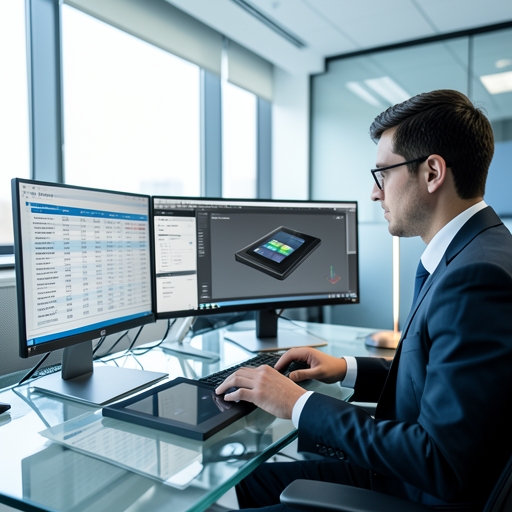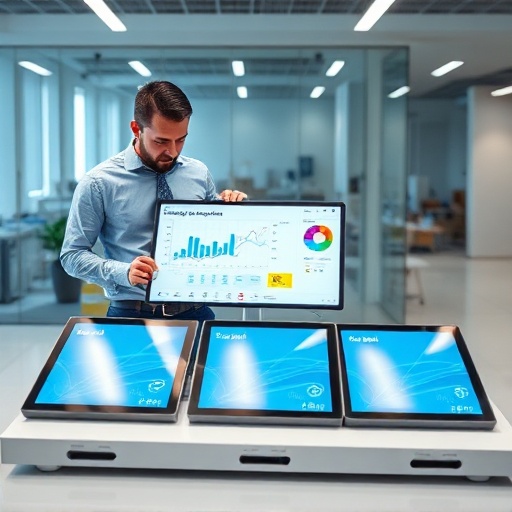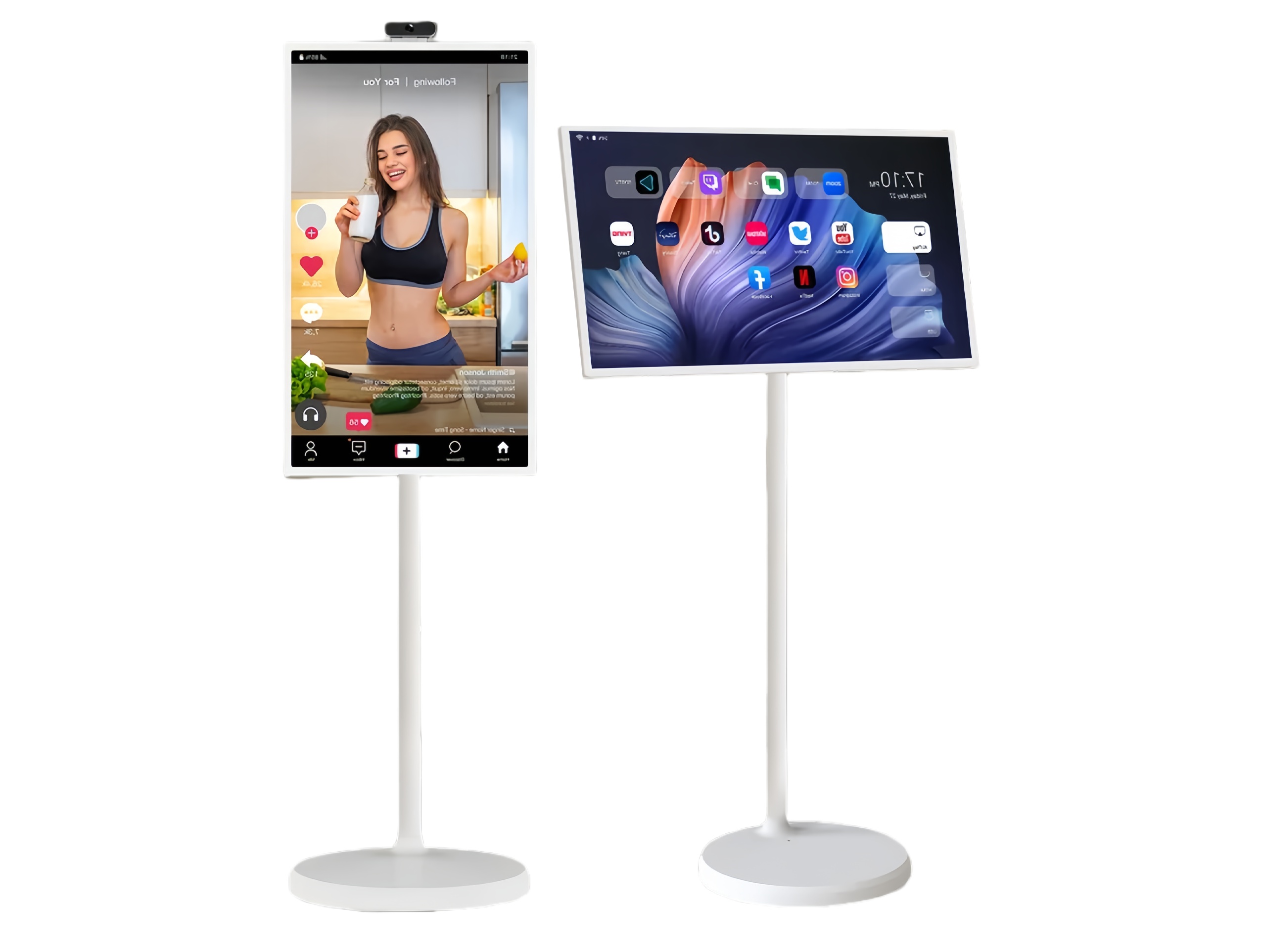
At Xingyue Technology, we believe that quality is designed and manufactured, not just inspected. To achieve near-zero defect rates for our global clients, we have implemented an uncompromising quality control process that governs every step of production. This guide takes you behind the scenes to see how ensure absolute reliability through rigorous IQC, IPQC, and OQC protocols.
The Core of Our Manufacturing: A Robust Quality Control Process
Building a reliable industrial or medical display requires more than just assembling parts. It requires a philosophy of defect prevention.
The Philosophy of Defect Prevention vs. Detection
Our quality management system is built to catch potential issues before they become problems. By identifying deviations early in the supply chain and assembly line, we prevent defective units from ever reaching the final packaging stage.
Maintaining ISO 9001 and IATF 16949 Standards
Our entire manufacturing facility operates under strict ISO 9001 guidelines. Every process, from raw material handling to optical bonding, is documented, standardized, and continuously audited. This ensures that the 10,000th screen you receive functions exactly like the approved golden sample.
The First Line of Defense: IQC (Incoming Quality Control)
A perfect product cannot be built with flawed materials. IQC (Incoming Quality Control) is our first and most crucial line of defense against manufacturing defects.
Strict Vetting of LCD Panels and Touch Controllers
Before any material enters our inventory, it undergoes rigorous sampling based on AQL (Acceptable Quality Limit) standards. We test incoming LCD panels for dead pixels, backlight bleeding, and color accuracy. Touch controller ICs are verified for proper firmware flashing and electrical stability.
Inspecting Cover Glass for Flaws and Transparency
The cover glass is the primary interface for the user. Our IQC inspectors use specialized lighting to check for microscopic scratches, pits, or inconsistencies in the Anti-Glare (AG) or Anti-Fingerprint (AF) coatings.
Supplier Quality Management and Material Traceability
We maintain a tight, fully traceable supply chain. If an anomaly is detected, our ERP system allows us to trace a specific component back to the exact batch and supplier, ensuring rapid corrective action.
Precision on the Assembly Line: IPQC (In-Process Quality Control)
Once raw materials are cleared, they move to the assembly line, where our IPQC (In-Process Quality Control) team acts as the vigilant guardians of the manufacturing process.
First Article Inspection (FAI) for Every New Batch
Before mass production begins, the first fully assembled unit—the "First Article"—is subjected to a comprehensive teardown and inspection. Mass production is halted until this unit is certified to perfectly match the client's engineering drawings.
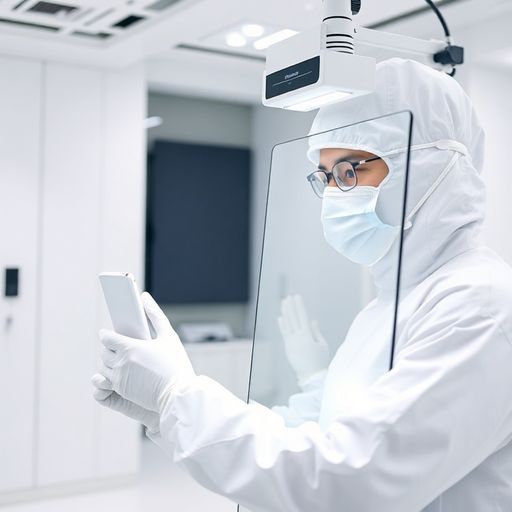
Real-Time Monitoring in Class 10k Cleanrooms
Dust is the enemy of optical bonding. Our IPQC teams continuously monitor the air particulate counts, temperature, and humidity inside our Class 10,000 cleanrooms to ensure the environment remains pristine during lamination.
Statistical Process Control (SPC) During Optical Bonding
During critical steps like OCA/OCR optical bonding, we use Statistical Process Control (SPC) to monitor curing temperatures, pressure levels, and alignment accuracy in real-time, instantly correcting any drift from our manufacturing tolerances.
The Final Checkpoint: OQC and Advanced Touch Screen Testing
Before a single module is boxed for shipment, it must pass our ultimate gatekeeper: OQC (Outgoing Quality Control).
100% Functional Testing: Linearity, Accuracy, and Multi-Touch
Unlike some factories that only do batch testing, we mandate 100% functional touch screen testing for our premium modules. Automated machines and trained technicians test for multi-touch accuracy, line-drawing linearity (ensuring lines don't "jitter" or break), and edge-to-edge sensitivity.
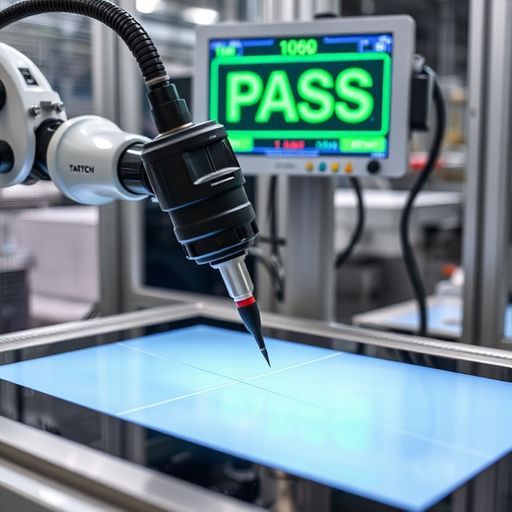
Cosmetic Inspections: Eliminating Dust, Scratches, and Bubbles
Units are inspected against a pure black and pure white background to ensure there are zero trapped dust particles, micro-bubbles from lamination, or cosmetic bezel defects.
Safe Packaging and Outgoing Audits
Even after passing functionality and cosmetic tests, a final audit is performed on the packaging. We ensure anti-static bags are sealed and custom shock-absorbing foam is perfectly placed to guarantee safe global transit.
Pushing Limits: Inside Our In-House Reliability Testing Lab
What happens after the screen leaves our factory? To guarantee our products survive the real world, we go a step further with exhaustive reliability testing. This is what truly separates us from standard assemblers.
Environmental Chambers: High/Low Temp and Humidity Tests
Our are placed into environmental chambers where they endure extreme thermal shock—rapidly cycling from -30°C to +85°C—along with 90% Relative Humidity tests to ensure adhesives don't fail and screens don't fog.
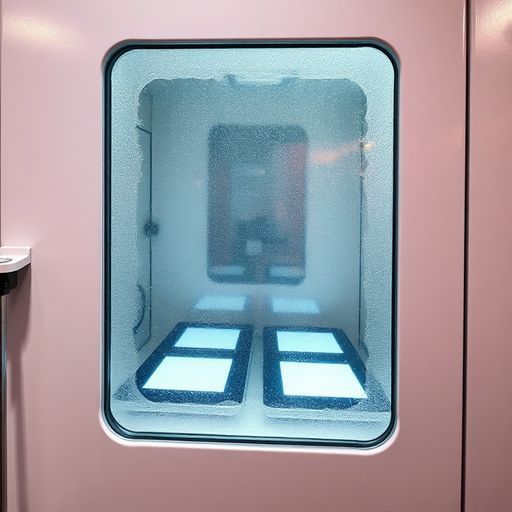
Mechanical Stress: Vibration, Drop, and Impact Resistance
For our industrial and automotive clients, we simulate years of physical abuse. Screens are subjected to constant high-frequency vibration testing on shaker tables and steel-ball drop tests to certify their IK impact ratings.
Long-Term Aging and Lifespan Simulation
We run screens at maximum brightness in high-heat environments for hundreds of hours (burn-in testing) to simulate years of 24/7 continuous operation, ensuring the backlight won't prematurely dim or fail in the field.
Partnering with Top-Tier Touch Screen Manufacturers for Your Success
In the hardware industry, an unreliable screen is the fastest way to ruin an otherwise brilliant product. By choosing a partner with a transparent, uncompromising quality control process, you eliminate downstream risks and protect your brand's reputation.
Tired of dealing with high defect rates and inconsistent display quality? Partner with a manufacturer that puts quality first. to request our detailed quality control manual or to audit our facilities for your next project.
Frequently Asked Questions (FAQ)
1. What do IQC, IPQC, and OQC mean in display manufacturing? These are the three pillars of a manufacturing quality system. IQC (Incoming Quality Control) ensures raw materials are flawless before production. IPQC (In-Process Quality Control) monitors the assembly line to prevent errors during manufacturing. OQC (Outgoing Quality Control) is the final 100% inspection of the finished product before it is shipped to the customer.
2. How do you conduct touch screen testing for custom modules? For custom modules, we develop bespoke testing jigs and software scripts based on your specific requirements. This touch screen testing validates specific gestures, glove-touch capabilities, water-rejection algorithms, and ensures the exact coordinate mapping matches your custom bezel.
3. What specific equipment is in your reliability testing lab? Our in-house lab is fully equipped to simulate harsh environments. Key equipment includes programmable high/low-temperature and humidity chambers, thermal shock chambers, electromagnetic shaker tables for vibration testing, salt spray testers for corrosion resistance, and precision drop-test machines for impact validation.