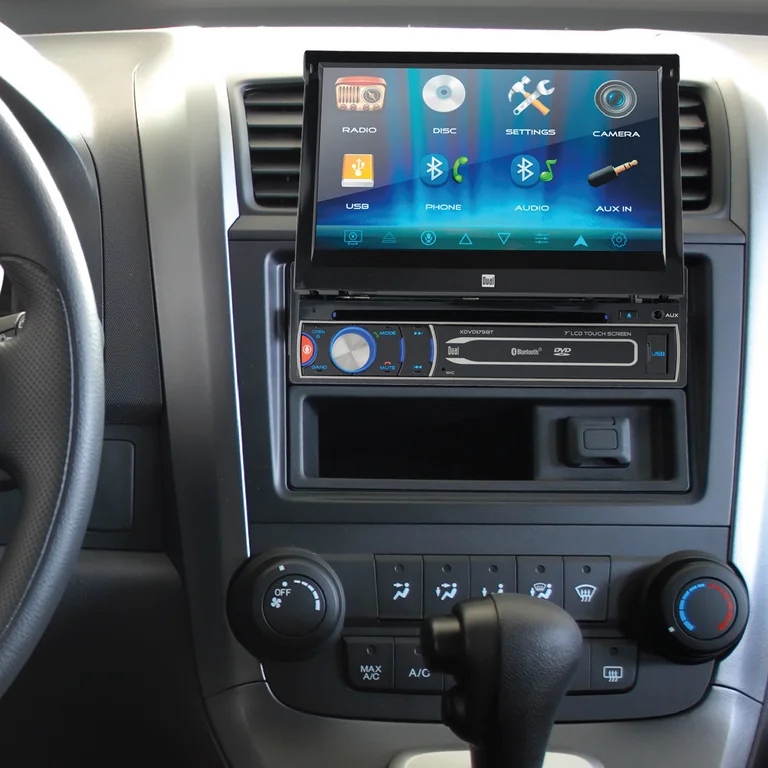
Recently, a leading telematics hardware provider approached Xingyue Technology with a recurring problem. The consumer-grade tablets they were using for their in-cabin systems were failing at an alarming rate. They needed a true, industrial-grade 7 Inch Automotive Touch Screen capable of surviving constant vibration, extreme cabin temperatures, and blinding glare. This case study details how we engineered a custom In-Car Display that kept their fleet on the road.
The Challenge: Why Standard Screens Fail in Fleet Management
When dealing with fleet management, equipment downtime means lost revenue. Our client's initial solution—retrofitting standard commercial displays—was costing them their reputation. We identified three major environmental killers:
Extreme Cabin Temperatures: The Silent Screen Killer
When a truck is parked in the summer sun, dashboard temperatures can easily exceed 70℃. Standard LCDs suffer from "isotropic failure" at these temperatures—the liquid crystals lose their alignment, turning the screen completely black. Conversely, in freezing winters, standard screens become sluggish and unresponsive.
Constant Vibration and Mechanical Stress on the Road
Commercial vehicles vibrate constantly. Over thousands of miles, this low-frequency vibration causes standard connectors to shake loose and delicate internal components (like the touch sensor FPC) to tear or disconnect.
Dangerous Glare and Poor Sunlight Visibility
Drivers operate in all lighting conditions. A standard glossy screen reflects the sun directly into the driver's eyes, making the vehicle touch screen impossible to read and creating a serious safety hazard.
Conquering the Heat: Wide-Temperature Automotive Display Screen
To solve the temperature issue, we had to rethink the core components of the Automotive Display Screen.
Selecting Industrial-Grade LCD Panels and Components
We discarded the commercial LCD cell and sourced an industrial-grade TFT-LCD panel specifically formulated with high-temperature liquid crystals. We also upgraded the touch controller IC to a robust automotive-grade chip designed to maintain sensitivity in extreme climates.
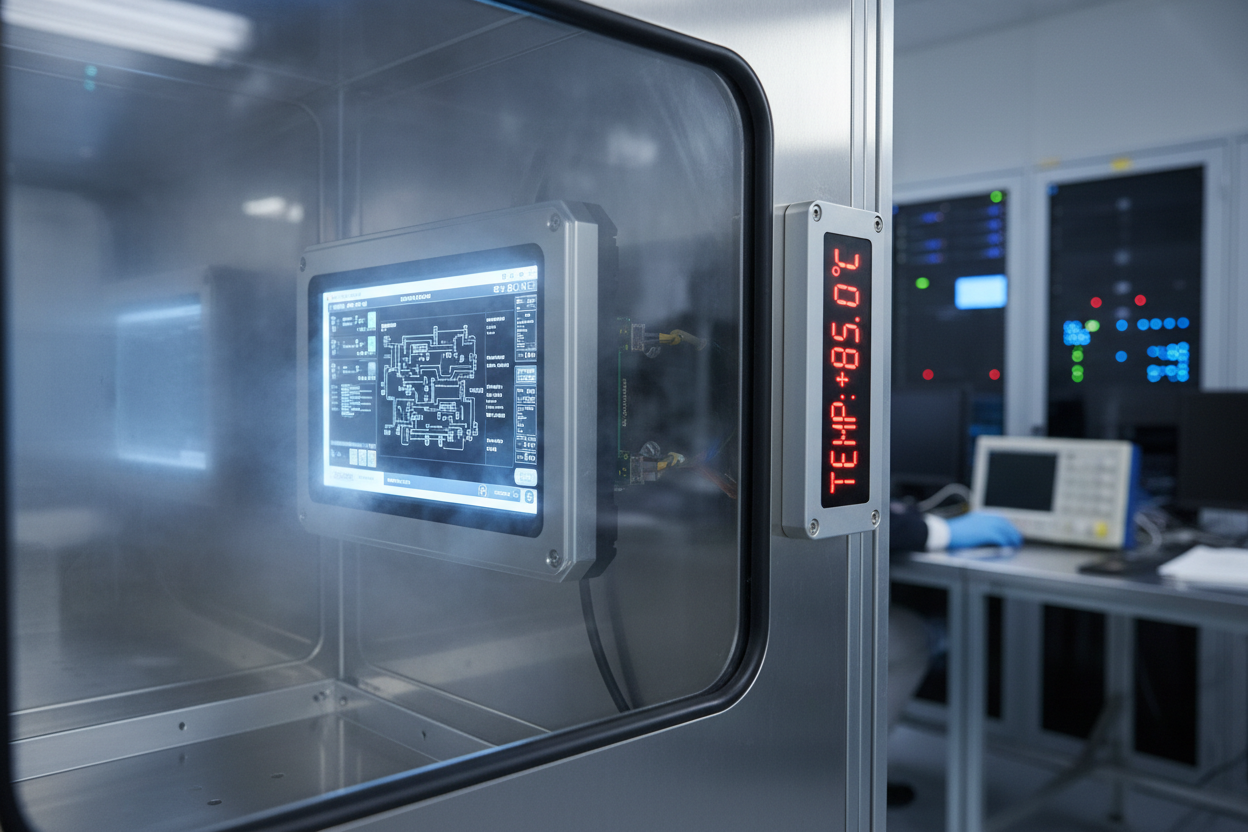
Ensuring Reliable Operation from -30℃ to +85℃
The new custom display module was engineered to guarantee a wide operating temperature range from -30℃ to +85℃ (and a storage temperature up to +90℃). Whether the truck is starting up in an Alaskan winter or driving through the Nevada desert, the screen wakes up instantly and functions flawlessly.
Thermal Management and Heat Dissipation Design
We optimized the backlight structure and the metal chassis of the display module to act as an efficient heat sink, preventing internal heat buildup from the high-brightness LEDs during long operational hours.
Built for the Road: Anti-Vibration Design for the 7 Inch Automotive Touch Screen
Next, we addressed the mechanical failures caused by the harsh ride of commercial trucks.
Reinforcing the Mechanical Structure for Rugged Vehicles
We designed a custom metal bezel and housing that provided structural rigidity. The 7 Inch Automotive Touch Screen was securely bracket-mounted rather than relying on weak consumer-style clips, preventing the screen from shifting within the customer's telematics enclosure.
Securing FPC Connections Against Constant Motion
The most vulnerable point in any touch display is the Flexible Printed Circuit (FPC) tail. To combat vibration, we implemented a specialized dispensing process. We applied industrial adhesive (UV glue) to reinforce the bonding area where the FPC connects to the glass sensor and the controller board, ensuring it could never shake loose.
Passing Automotive-Grade Shock and Vibration Tests
Before mass production, the custom prototypes were subjected to rigorous shock and vibration testing profiles mimicking real-world road conditions, successfully meeting the client's stringent automotive durability requirements.
Driver Safety First: Sunlight Readability in the Vehicle Touch Screen
For a driver, struggling to read a map due to glare is a critical safety issue. We implemented a multi-layered optical solution.
The Critical Role of Optical Bonding in the Cockpit
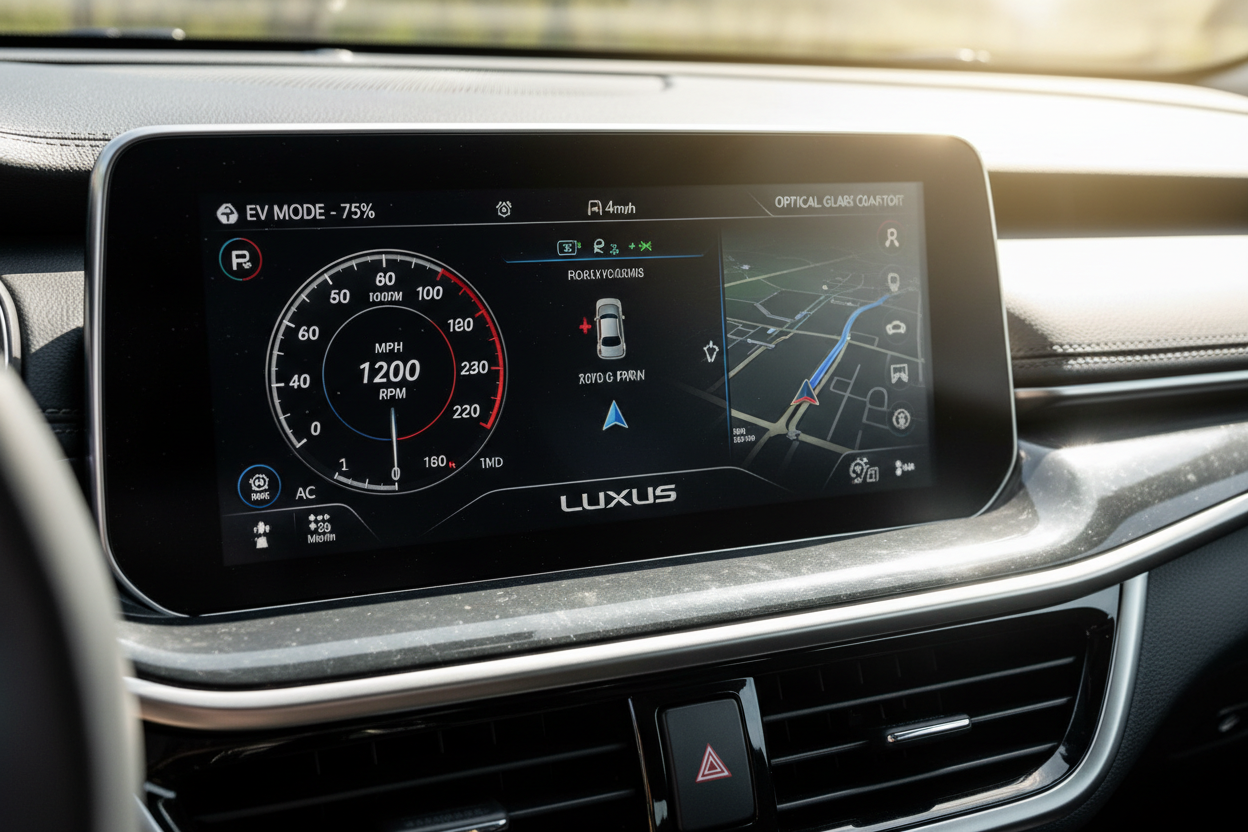
We used Optical Bonding technology to completely fill the air gap between the touch panel and the LCD with optical-grade resin. This eliminated internal light refraction, drastically improved contrast, and prevented condensation from forming inside the screen during sudden temperature changes.
High Brightness Backlights for Direct Sunlight
We upgraded the LED backlight unit to deliver a brightness of 1000 nits. This high-luminance output ensures that the screen powers through ambient daylight, remaining vivid and clear.
Anti-Glare (AG) Cover Glass to Reduce Eye Strain
Finally, the custom cover glass was chemically etched with an Anti-Glare (AG) coating. This diffuses direct sunlight, preventing harsh reflections from blinding the driver while maintaining the tactile smoothness needed for easy swiping.
The Result: Increased Uptime and Driver Efficiency for the Fleet
The deployment of the newly engineered 7 Inch Automotive Touch Screen completely transformed our client's telematics product.
Drastic Reduction in Hardware Failure Rates
The RMA (Return Merchandise Authorization) rate dropped to near zero. The wide-temperature and anti-vibration enhancements completely eliminated the "black screen" and loose connection issues.
Positive Feedback from Commercial Drivers
Fleet drivers praised the new In-Car Display. They no longer had to squint or shade the screen with their hands to read navigation instructions, leading to a safer, less stressful driving experience.
Your Trusted Partner for Rugged Automotive Touch Solutions
The demands of the automotive and commercial fleet industries are unforgiving. Off-the-shelf consumer screens simply cannot survive. Xingyue Technology understands the physics of the road. We combine high-quality materials, optical bonding expertise, and rugged mechanical design to produce displays that perform when it matters most.
Developing a reliable telematics or fleet management device? Don't let a standard screen be your point of failure.
Frequently Asked Questions (FAQ)
1. What is the operating temperature range for your automotive display screens? Our custom Automotive Display Screens are specifically engineered with industrial-grade liquid crystals and components. They typically support a wide operating temperature range from -30℃ to +85℃, and storage temperatures from -40℃ to +90℃, making them suitable for all global climates.
2. How does optical bonding improve an in-car display? Optical bonding removes the air gap between the touch sensor and the LCD. In a vehicle, this provides three massive benefits: it significantly reduces glare and reflections for superior sunlight readability; it prevents fogging or condensation inside the screen; and it increases the physical impact resistance of the display.
3. Can you customize the 7-inch touch screen for different vehicle dashboards? Yes. As an OEM/ODM manufacturer, we can customize the 7 Inch Automotive Touch Screen