You are experiencing "ghost touches." The culprit is Electromagnetic Interference (EMI).
In environments dense with electrical noise, an unprotected screen is a massive liability. It can cause machine downtime or, in medical settings, endanger lives. At Xingyue Technology, we engineer robust display solutions designed to conquer electrical noise. This guide explores the science of EMI Shielding and how we ensure your devices pass strict EMC testing.
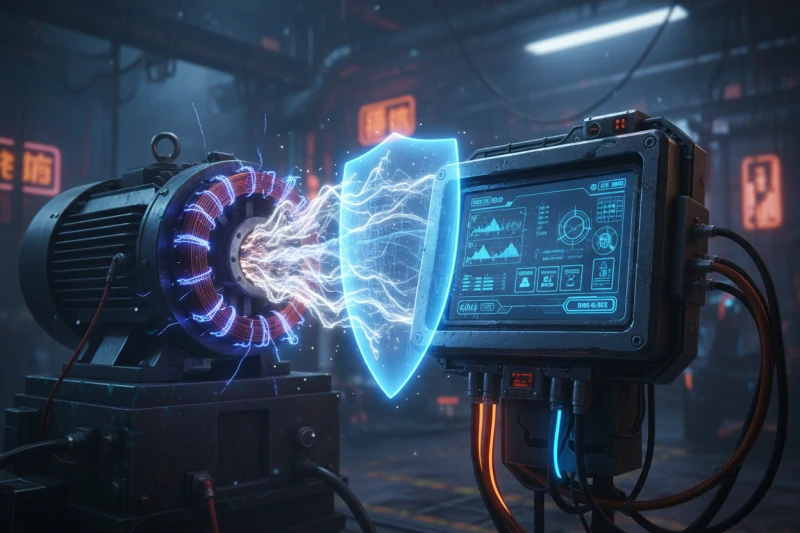
To fix the problem, we must understand the enemy. EMI Shielding is necessary because capacitive touch screens are inherently sensitive to electrical fields.
How Electrical Noise Disrupts Capacitive Touch Fields
A projected capacitive touch screen works by generating a minute, uniform electrostatic field across its surface. When a conductive object (like your finger) touches the glass, it alters the local capacitance. The touch controller detects this tiny change to calculate the coordinates.
However, strong external electromagnetic waves can introduce "noise" into this field. If the noise is stronger than the signal generated by your finger, the touch controller gets confused.
The Symptoms: Ghost Touches, Jitter, and Dead Zones
When EMI overwhelms the touch controller, the results are immediate and frustrating. Ghost touches occur when the screen registers inputs that never happened. Jitter makes sliders and dragging motions impossible. In severe cases, the screen may freeze completely into a "dead zone."
Radiated vs. Conducted Emissions in Devices
EMI enters your device in two ways. Radiated EMI travels through the air like radio waves from nearby antennas or sparking motors. Conducted EMI travels directly through the power and ground cables connected to your device. Comprehensive anti-interference design must address both paths.
Defending the Factory Floor: Industrial Touch Screen Challenges
The manufacturing floor is one of the most hostile environments for electronic components. An Industrial Touch Screen requires specialized defenses.
Proximity to Motors, Inverters, and High-Voltage Cables
Industrial environments are packed with heavy machinery. Variable Frequency Drives (VFDs), giant AC motors, and high-voltage power lines generate massive electromagnetic spikes when they start, stop, or change speeds.
Maintaining Accuracy in Automated Production Lines
In a CNC machine or robotic assembly line, a false touch trigger could halt a production line or cause a severe accident. For an panel, the Signal-to-Noise Ratio (SNR) must be heavily optimized to reject factory floor noise.
Achieving High Anti-Interference Ratings for Heavy Industry
We customize the firmware of industrial-grade touch controllers (such as ILITEK) to filter out specific frequency bands common in factories. This firmware tuning works alongside hardware shielding to provide a rock-solid Industrial Touch Screen.
Critical Care Reliability: EMI Shielding for a Medical Display
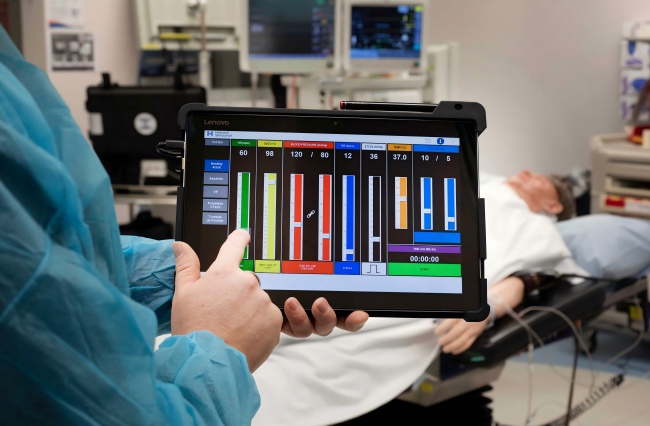
If industrial EMI is about preventing downtime, medical EMI is about saving lives. A Medical Display faces a unique, two-way challenge regarding electromagnetics.
Why Healthcare Environments Demand Strict EMC Compliance
Hospitals are crowded with sensitive, life-saving equipment. Medical devices must undergo stringent Electromagnetic Compatibility (EMC) testing, specifically the IEC 60601-1-2 standard.
Protecting Sensitive Patient Monitoring Systems
A must function perfectly even when placed next to high-frequency electrosurgical units or MRI machines. Robust EMI Shielding prevents these external fields from causing the display to freeze during a critical procedure.
Ensuring Surgical Displays Don't Interfere with Life Support
EMC testing is a two-way street. Your device must resist interference (immunity), but it must also not emit excessive interference (emissions). An unshielded touch panel acts like a giant antenna, radiating noise that could disrupt a nearby pacemaker or ECG machine. Proper shielding absorbs these internal emissions.
Core Anti-Interference Tech: ITO vs. Metal Mesh Sensors
The foundation of strong anti-interference capability lies in the touch sensor material itself.
The Limitations of Standard ITO (Indium Tin Oxide)
Most standard touch screens use ITO, a transparent conductive coating. While cheap and effective for consumer devices, ITO has relatively high sheet resistance. In large screens or highly noisy environments, this high resistance degrades the touch signal, making it vulnerable to EMI.
How a Metal Mesh Sensor Lowers Surface Resistance
For extreme environments, we utilize a metal mesh sensor. Instead of a continuous ITO coating, this technology uses a microscopic grid of highly conductive metal (like copper or silver). This grid is virtually invisible to the naked eye.
Superior Signal-to-Noise Ratio (SNR) for Large Panels
Because metal is vastly more conductive than ITO, the sheet resistance of a metal mesh sensor is incredibly low. This allows the touch controller to drive a much stronger signal through the panel. A stronger signal creates a drastically higher Signal-to-Noise Ratio (SNR). The controller can easily distinguish your finger's strong signal from the background EMI noise.
Implementing Comprehensive EMI Shielding Strategies
Upgrading the sensor is just one part of the puzzle. At Xingyue Technology, we employ a multi-layered hardware approach to achieve total EMI Shielding.
The Importance of Proper Grounding Techniques
The best shield is useless without a path to ground. We design our touch modules with dedicated grounding tapes and wide silver traces. This ensures that any electromagnetic energy absorbed by the shield is safely channeled away from the sensitive controller IC and into the device's main chassis ground.
Shielding the FPC (Flexible Printed Circuit) and Controller
The ribbon cable (FPC) that connects the touch sensor to the motherboard acts like a receiving antenna for EMI. We apply conductive EMI shielding tape directly over the FPC. We also utilize metal shielding cans over the touch controller IC to block radiated noise.
Adding Conductive ITO Films and Copper Meshes
For extreme medical or military applications, we can laminate a specialized, highly conductive transparent ITO film or a micro-fine blackened copper mesh directly to the back of the cover glass or LCD. This creates a literal Faraday cage across the front of the display, blocking both incoming and outgoing electromagnetic waves.
Ensure Your Device Passes EMC Certification with Xingyue
Solving touch screen interference requires a deep understanding of materials, electronics, and firmware tuning. You cannot simply fix a poorly designed screen with a software update later.
Struggling to get your device through EMC compliance testing due to touch screen interference? Don't let EMI delay your product launch. to discuss custom EMI Shielding solutions for your industrial or medical displays.
Frequently Asked Questions (FAQ)
1. What is the difference between EMI and EMC? EMI (Electromagnetic Interference) is the actual electrical noise or disruption itself. EMC (Electromagnetic Compatibility) is the ability of a device to operate normally in an environment with EMI, without generating unacceptable EMI that disrupts other nearby equipment.
2. Can your medical displays pass IEC 60601-1-2 EMC testing? Yes. We design our Medical Display modules specifically with IEC 60601-1-2 compliance in mind. By integrating proper grounding, FPC shielding, and custom firmware tuning, we provide components that help your final medical device smoothly pass rigorous EMC certification.
3. Why is a metal mesh sensor better for large industrial screens? As screen size increases, the electrical resistance of traditional ITO increases, weakening the touch signal. A metal mesh sensor maintains ultra-low resistance regardless of size. This provides a massive boost to the Signal-to-Noise Ratio (SNR), making it the ultimate solution for large Industrial Touch Screens