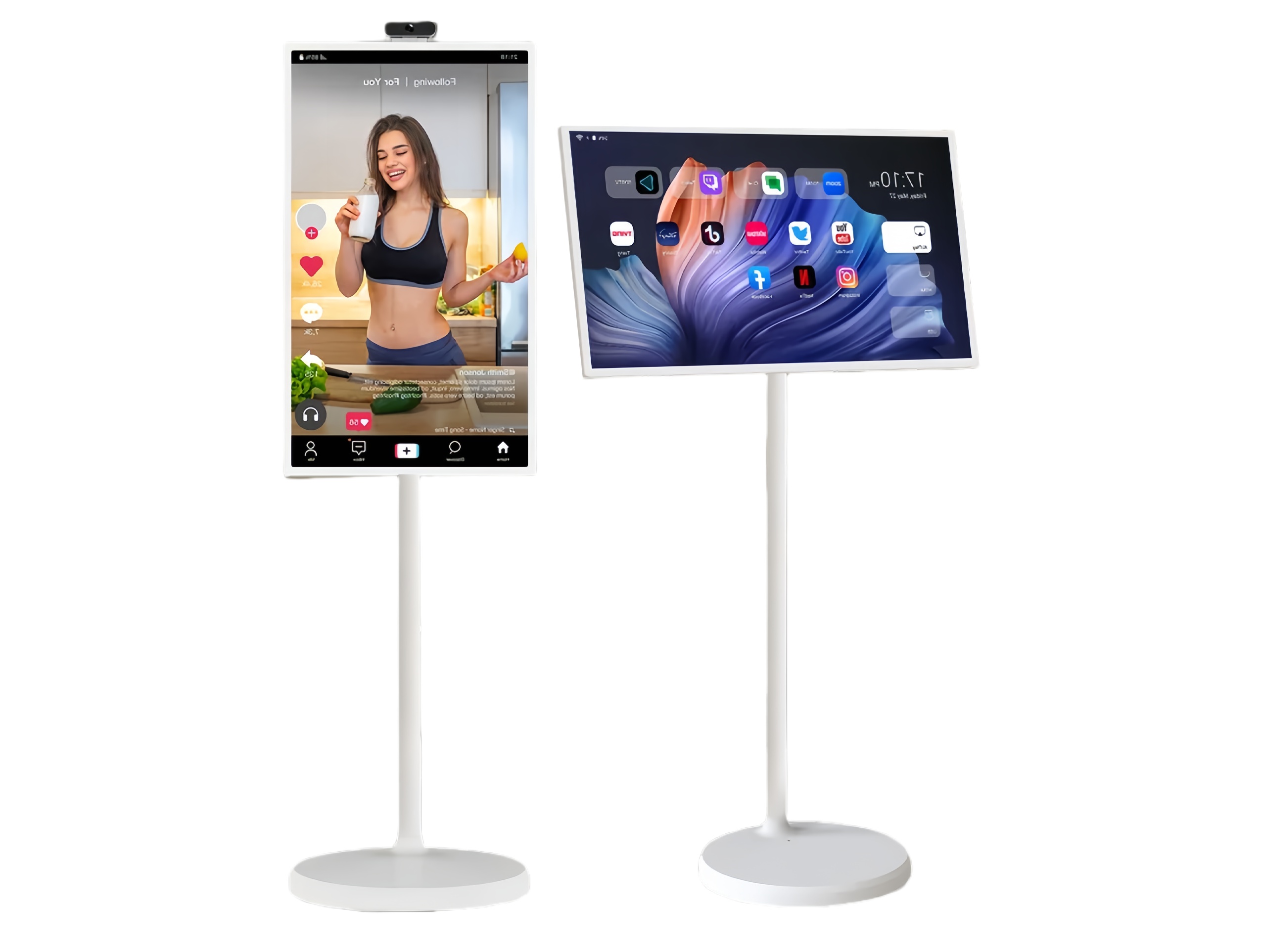
Commercial Display is engineered differently.
Built for 24/7 Operation and Reliability
Consumer TVs are designed to run for maybe 6-8 hours a day. Running them 24/7 leads to overheating, image retention ("burn-in"), and premature failure. Our commercial screens are built with industrial-grade components and advanced cooling systems to operate reliably around the clock, 365 days a year.
Superior Brightness and Color Accuracy
Standard TVs usually have a brightness of 250-350 nits, which is fine for a living room but looks dim in a brightly lit store. Commercial Digital Signage Displays typically start at 500 nits and go much higher, ensuring your digital advertising screen remains vibrant and readable even under strong ambient lighting.
Portrait vs. Landscape Orientation Flexibility
Consumer TVs are designed solely for landscape (horizontal) use. Turning them sideways for a portrait mode menu board can cause heat to pool incorrectly, damaging the panel. Commercial displays are engineered to support both orientations perfectly.
Location, Location, Location: Indoor vs. Outdoor Digital Display
Where you place your screen dictates the technology you need. The gap between an indoor screen and an Outdoor Digital Display is massive.
Understanding Nits: Why Brightness is Critical Outdoors
For an outdoor screen to be visible in daylight, it needs to be incredibly bright. While an indoor screen needs 500-700 nits, a sunlight readable outdoor display requires at least 2,500 nits. Anything less, and your content will be invisible on a sunny day.
Weatherproofing: The Importance of IP65 Ratings
Outdoor screens face rain, dust, and humidity. An IP65 waterproof rating is essential, ensuring the enclosure is completely dust-tight and protected against water jets from any angle.
Managing Thermal Challenges in Direct Sunlight
Direct sunlight can cause a screen to turn black (isotropic failure) due to overheating. Our outdoor solutions utilize specialized high-temperature liquid crystals and intelligent fan-cooling or air-conditioning systems to maintain optimal performance in any weather.
Engaging Your Audience: The Rise of Interactive Digital Signage
Passive viewing is good; active engagement is better. Interactive Digital Signage transforms a viewer into a user, significantly increasing dwell time and brand recall.
Transforming Passive Viewers into Active Users
By adding touch functionality, a screen becomes a service point. Users can browse catalogs, customize products, or find their way on a map. This shifts the dynamic from "shouting at" the customer to "helping" them.
Applications for Touch Screen Kiosks in Retail
A Touch Screen Kiosk can serve as an endless aisle, allowing customers to order items that aren't in stock at the physical store. In fast-food chains, self-ordering kiosks have been proven to increase average ticket size.
Capacitive vs. IR Touch for Large Screens
For large-format displays, we offer both Projected Capacitive (PCAP) and Infrared (IR) touch technologies. PCAP offers a sleek, bezel-free "smartphone-like" experience, while IR is a cost-effective solution for very large screens or video walls.
Specific Use Cases: Tailoring the Screen to the Job
Different businesses have different needs. Here is how specialized screens fit into various sectors.
Digital Menu Boards for Restaurants
Digital menu boards need to be bright, easy to update, and resistant to grease and heat if placed near kitchens. Using a networked solution allows you to change prices and items instantly across all locations.
Wayfinding Screens for Malls and Airports
These require large, high-resolution panels with responsive touch capabilities. Durability is key here, as these screens see thousands of interactions daily.
Advertising Video Walls for High Impact
For maximum visual impact, an advertising video wall combines multiple screens with ultra-narrow bezels to create a single, massive image. This is ideal for flagship stores and large public venues.

Key Features to Look For: From Glass Covers to Connectivity
When sourcing your display, pay attention to the hardware details that ensure longevity.
Vandal-Proof Tempered Glass Protection
Public displays are vulnerable to accidental bumps or vandalism. We equip our commercial screens with chemically strengthened tempered glass covers (often Mohs 7 hardness) to protect the delicate LCD panel underneath.
Seamless Integration with Media Players and CMS
A screen is useless without content. Our displays offer diverse connectivity (HDMI, USB, OPS slots) to integrate seamlessly with your preferred media players and Content Management Systems (CMS).
Customizing Bezels and Branding
As a commercial touch screen manufacturer, we can customize the bezel color, logo placement, and even the physical shape of the housing to align perfectly with your brand identity.
Maximizing ROI with the Right Digital Advertising Screen Solution
Investing in Digital Signage Displays is an investment in your brand's future. By choosing the right grade of equipment—whether it's a rugged outdoor totem or a sleek indoor touch kiosk—you ensure your message is seen, your customers are engaged, and your hardware lasts for years. Xingyue Technology is committed to providing the reliable, high-performance visual solutions you need to succeed.
Ready to captivate your audience?
Frequently Asked Questions (FAQ)
1. Can I use a regular TV for digital signage? We strongly advise against it. Consumer TVs are not built for 24/7 usage, lack the necessary brightness for commercial environments, and do not support portrait orientation reliably. Using a TV often voids the warranty if used for commercial purposes.
2. What brightness level is needed for an outdoor digital display? For a semi-outdoor environment (like a window facing outwards), 1,500 nits is recommended. For a full outdoor digital display under direct sunlight, you need a high brightness display with at least 2,500 nits to ensure readability.
3. What is the lifespan of a commercial touch screen kiosk? A high-quality commercial touch screen